Free Phases of the Moon Word Search Printable

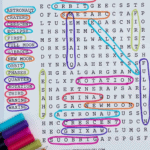
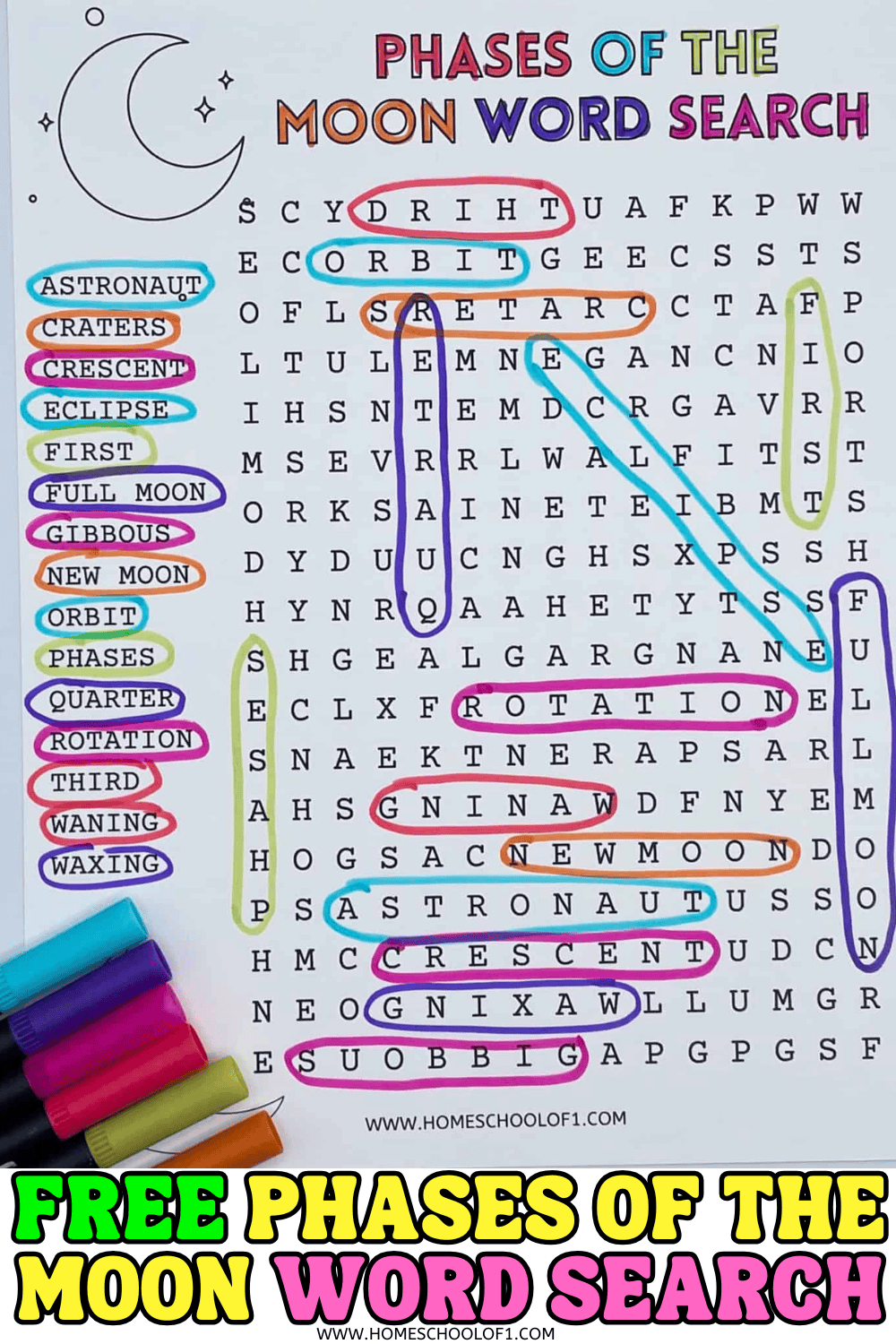
This free phases of the moon word search is a fun way for kids to review lunar vocabulary while learning about the Moon and its changing appearance.
The printable includes 15 space-related words, including waxing, waning, crescent, and gibbous, plus an answer key. It’s ideal for upper elementary and middle school science lessons, morning work, or a quick review of the lunar cycle.
What Are The Phases Of The Moon?
The Moon goes through eight phases as it orbits Earth, changing how much of its sunlit surface we can see. A complete lunar cycle takes approximately 29.5 days.
The eight phases of the Moon, in order, are:
- New Moon – The Moon is barely visible from Earth.
- Waxing Crescent – A small, growing crescent becomes visible.
- First Quarter – Half of the Moon’s visible surface is illuminated.
- Waxing Gibbous – More than half is illuminated, and the bright portion is increasing.
- Full Moon – The entire visible surface appears illuminated.
- Waning Gibbous – The illuminated portion begins to decrease.
- Third Quarter – Half of the visible surface is illuminated again.
- Waning Crescent – A thin crescent remains before the cycle starts again.
The words waxing and waning describe whether the illuminated portion is growing or shrinking. Crescent means less than half is illuminated, while gibbous means more than half.
These are some of the key science terms children can practice with the word search below.
Moon Phases Word Search
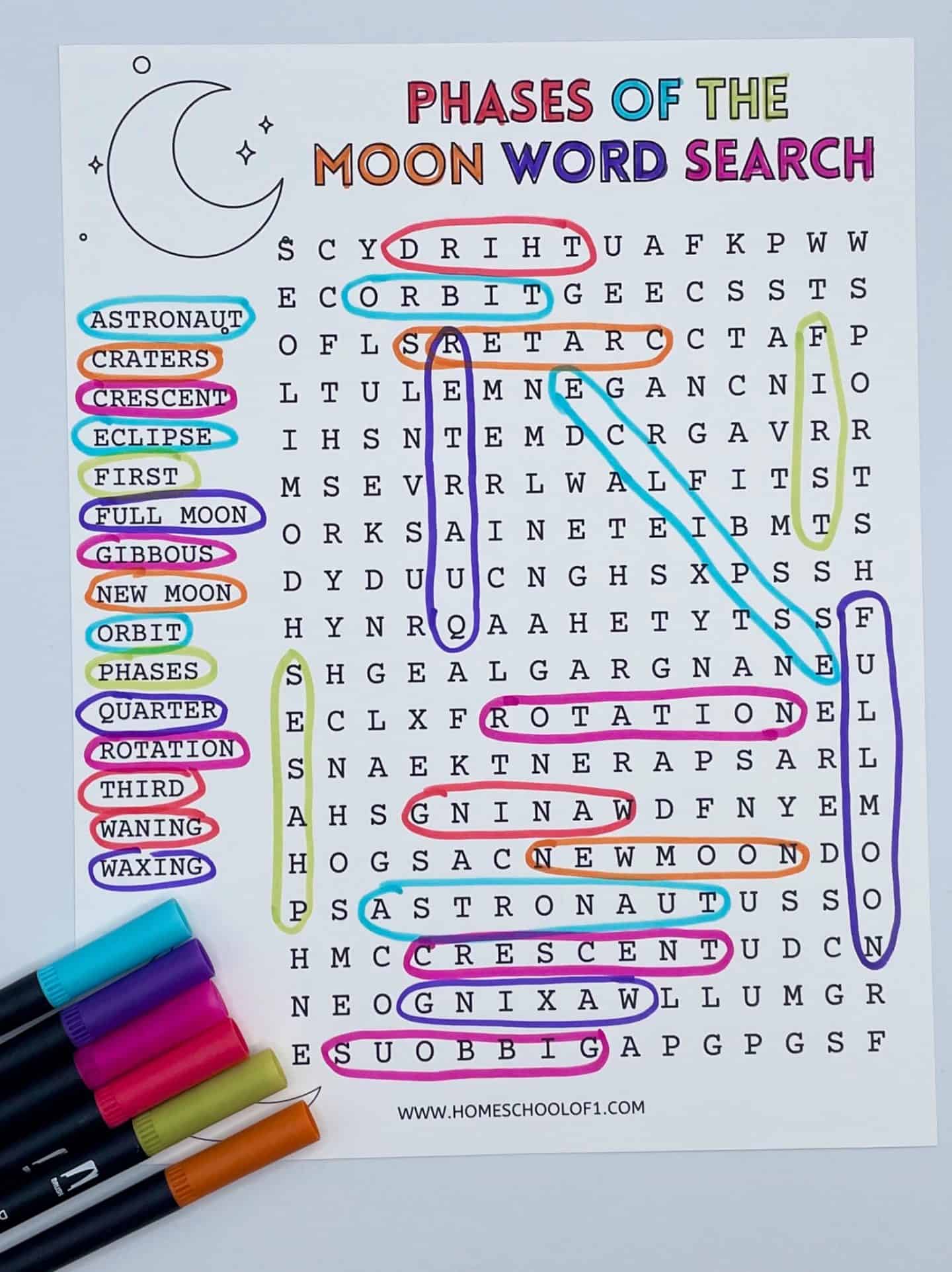
This free moon phases word search contains 15 words related to the Moon, space, and the lunar cycle. It’s suitable for upper elementary and middle school students studying the solar system.
The two-page PDF includes the word search puzzle and a separate answer key, so it’s easy to use for independent work, science lessons, or a quick vocabulary review.
Words are hidden horizontally, vertically, diagonally, and backward, adding an extra challenge.
Moon Word Search Vocabulary
The 15 words included are:
- Astronaut
- Craters
- Crescent
- Eclipse
- First
- Full moon
- Gibbous
- New moon
- Orbit
- Phases
- Quarter
- Rotation
- Third
- Waning
- Waxing
Classroom tip: Once students have found all 15 words, ask them to explain the difference between waxing and waning, or arrange the eight Moon phases in the correct order.
More Free Moon Printables
Keep exploring the Moon and space with these free printable activities. From labeling the lunar phases to solving puzzles and creative writing, they’re great for extending your science lessons.
- If I Were an Astronaut worksheet – Encourage creative writing as kids imagine what it would be like to travel into space.
- Phases of the Moon worksheets – Help students identify, label, and understand the eight phases of the lunar cycle.
- Moon phases crossword puzzle – Test students’ knowledge of lunar vocabulary with science-themed clues.
- Phases of the Moon Elf on the Shelf printable – Add a little Christmas fun to your Moon science lessons with this festive activity.
Best Books About the Moon for Kids
These children’s books help explain lunar phases, Moon exploration, and why the Moon appears to change shape throughout the month.
- The Moon Book by Gail Gibbons – Explains lunar phases, eclipses, tides, and Moon exploration with clear illustrations.
- Faces of the Moon by Bob Crelin – Uses clever cutout illustrations to help children understand why the Moon appears to change shape.
- I Am the Moon – A colorful, child-friendly introduction to the Moon and its changing phases, ideal for younger readers.
After reading, challenge kids to identify the eight phases of the Moon or explain some of the vocabulary from their word search.
Get Your Free Moon Phases Word Game Here!
Ready to grab your free printable? Just pop your name and email into the form below, and it’s all yours!
Tip: Use a personal email address (like Gmail), school or work emails sometimes filter printable links.

If you don’t see the form below, click here to get the free PDF.
More Free Word Search Puzzles
If your kids enjoyed this moon-themed puzzle, they might also like these other free word searches:
- Human Body Systems Word Search
- Star Wars Word Search
- Roald Dahl Word Search
- Unicorn Word Search
- Word Search Generator – Create your own printable word search using science vocabulary or any words you’re studying.
Last Updated on 16 October 2026 by Clare Brown
