Free Rabbit Life Cycle Worksheet For Kids

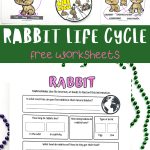
The rabbit life cycle for kids is easy to explore because children can see how a tiny newborn kit gradually develops into an adult rabbit. Rabbits are mammals, so their life cycle looks very different from animals that go through metamorphosis.
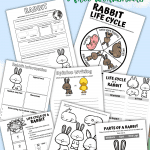
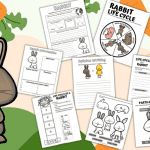
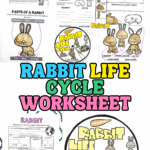
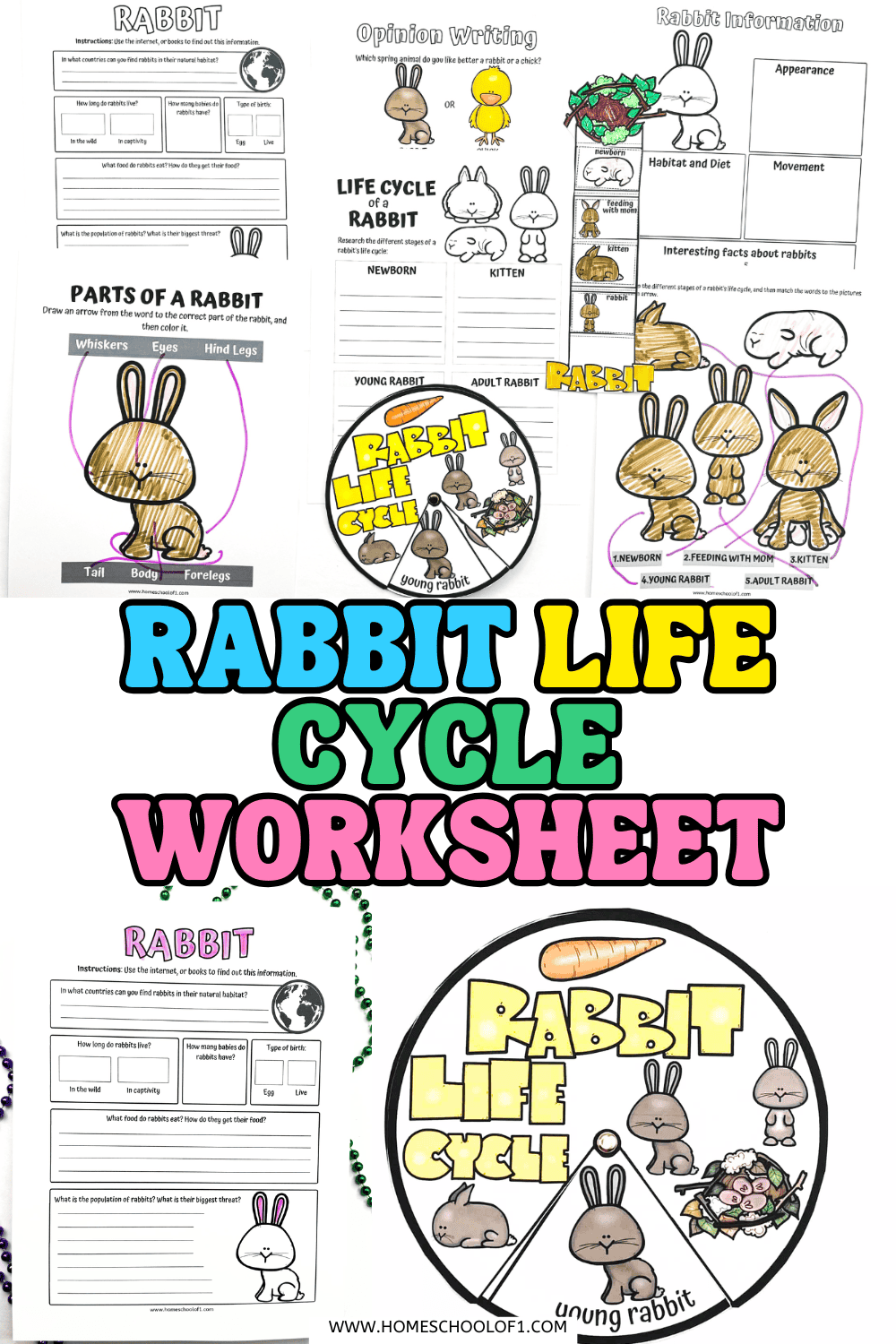
We used these rabbit life cycle worksheets to explore each stage in more detail, with labeling, research, coloring, sequencing, and a spinner craft to make the lesson more hands-on.
The 9-page printable works well for elementary science, spring lessons, or an Easter theme, with activities that can be adapted for roughly grades 1–5.
**This post may contain affiliate links. As an Amazon Associate and a participant in other affiliate programs, I earn a commission on qualifying purchases.**
4 Stages of the Rabbit Life Cycle
For kids, the rabbit life cycle can be explained in four simple stages: newborn, kit, young rabbit, and adult rabbit. Unlike animals such as butterflies or frogs, rabbits don’t go through metamorphosis. They are mammals, so the babies are born alive and gradually grow to look like adult rabbits.
1. Newborn
Newborn rabbits are born without fur and with their eyes and ears closed. They stay safely in the nest and depend completely on their mother for milk and warmth.
2. Kit
As the baby rabbit grows, its fur develops and its eyes and ears open. Kits become much more active and begin exploring and eating solid food as they gradually become less dependent on their mother.
3. Young Rabbit
Young rabbits look much more like adults but are still growing. They are independent, active, and continue developing until they reach their full adult size.
4. Adult Rabbit
Once fully grown, an adult rabbit can reproduce and have kits of its own. This begins the rabbit life cycle again.
What’s Included in the Rabbit Life Cycle Printable
This 9 page rabbit life cycle for kids set is designed to work for a wide age range, from early elementary through upper elementary (roughly grades 1–5).
Some pages are simple labeling and coloring activities for younger learners, while others include research and writing prompts that challenge older students a bit more.
Instead of just one sequencing page, this set walks kids through how a rabbit grows from newborn kit to adult, giving them space to write, color, label, research, and build the life cycle in different ways.
The variety makes it easy to adapt whether you’re teaching a mixed-age homeschool group or differentiating in the classroom.
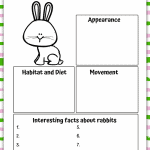
Rabbit Discovery Page
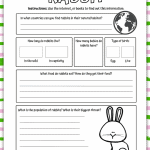
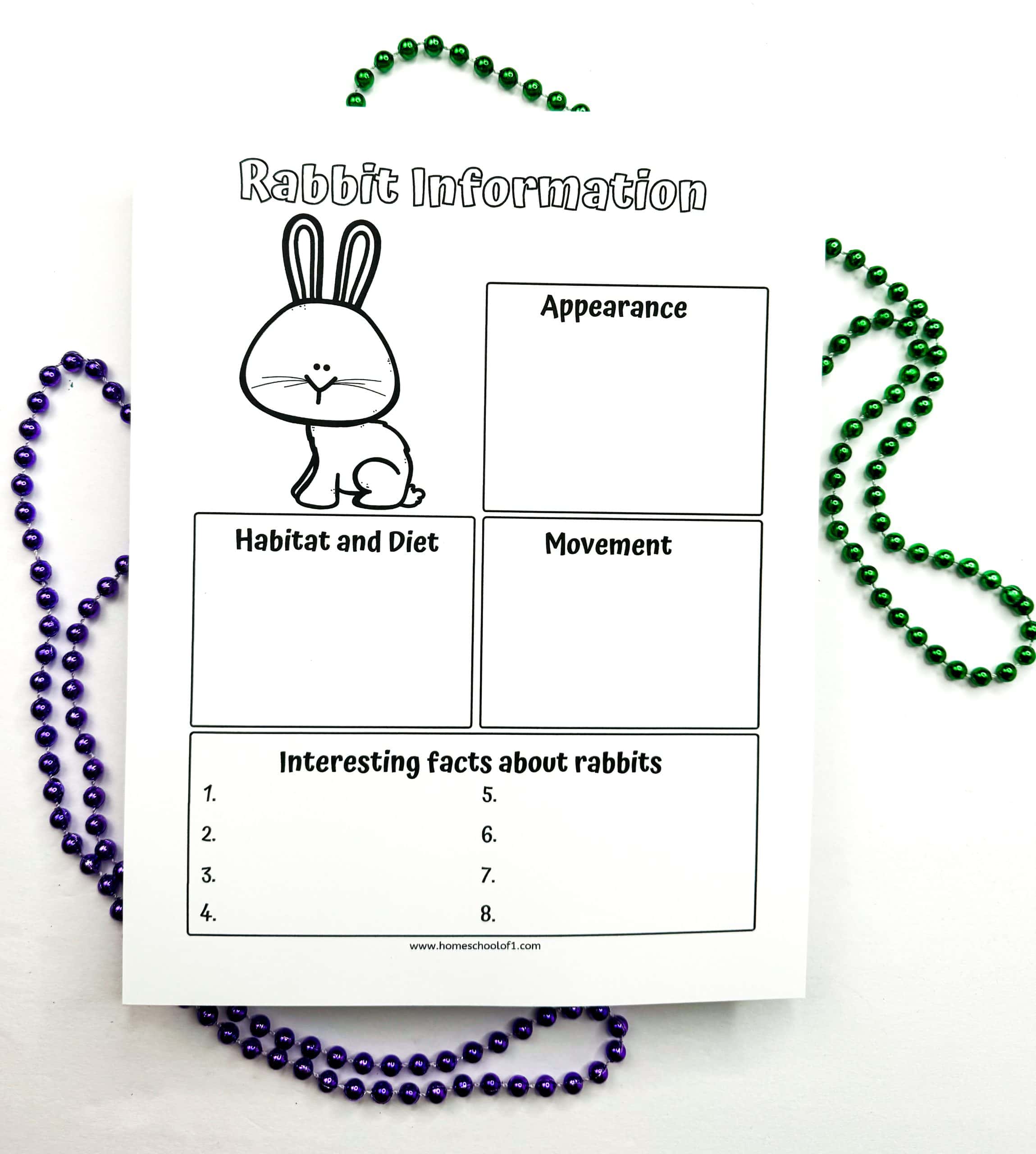
This introductory worksheet helps kids gather basic rabbit facts before jumping into the life cycle stages. It covers appearance, habitat, diet, movement, and space for interesting facts.
I like starting here because it gives context first, kids understand what a rabbit is before breaking down how it grows.
Interesting Rabbit Facts
These quick facts spark curiosity and often lead to more questions:
- A baby rabbit is called a kit (not a bunny).
- Rabbits’ teeth never stop growing.
- When they’re happy, they do a “binky” — a twisty jump in the air.
- Their side-set eyes allow them to see almost all the way around.
- They can purr softly when relaxed.
- Carrots aren’t actually a natural staple food.
- A pregnancy lasts about 28–31 days.
- Females are called does, and males are called bucks.
These make great discussion starters before moving into the life cycle stages.
Opinion Writing Page
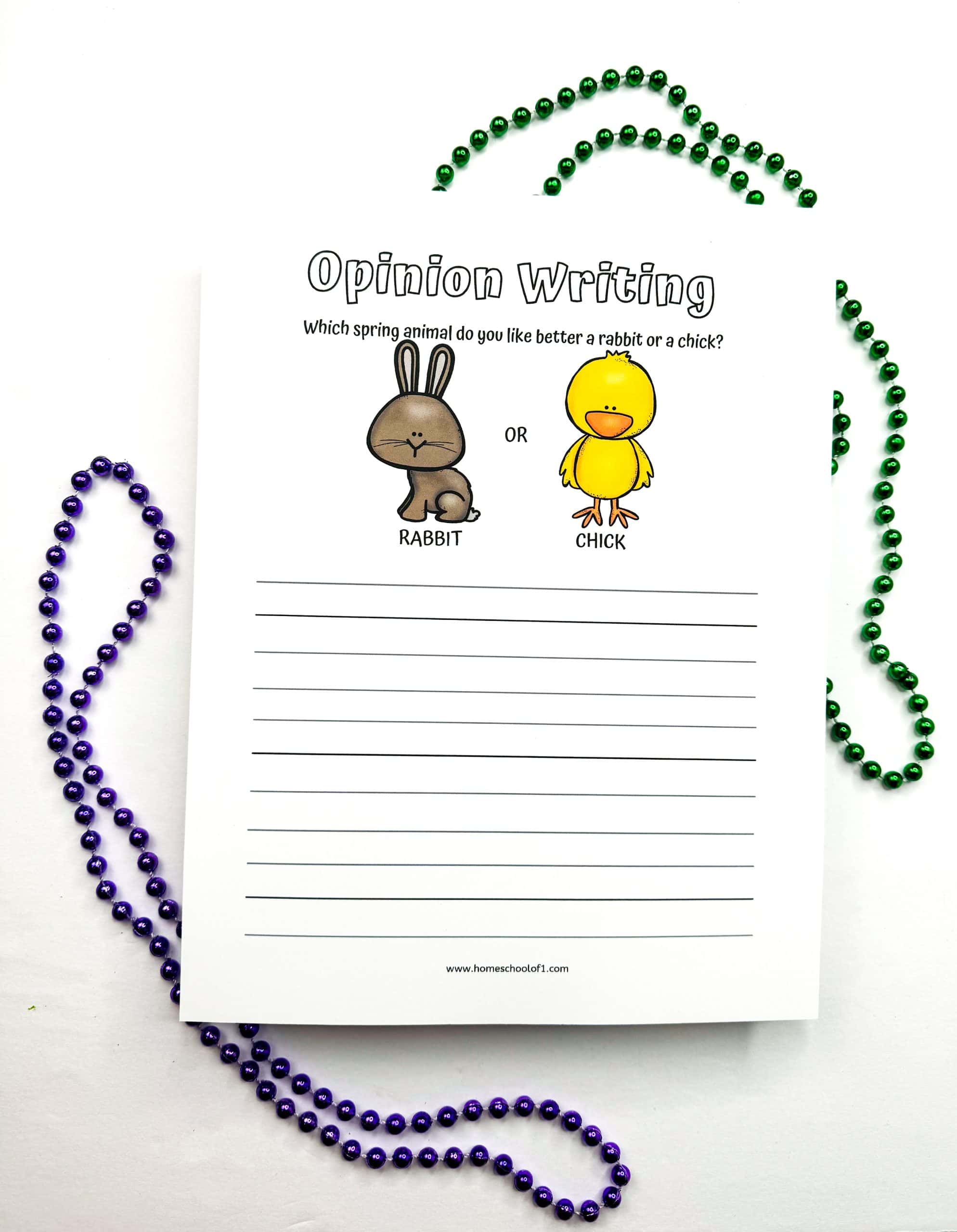
There’s also a simple opinion writing worksheet comparing rabbits and chicks. It gives younger students an easy way to practice reasoning without overcomplicating things.
It works especially well during spring themes.
Rabbit Research Page
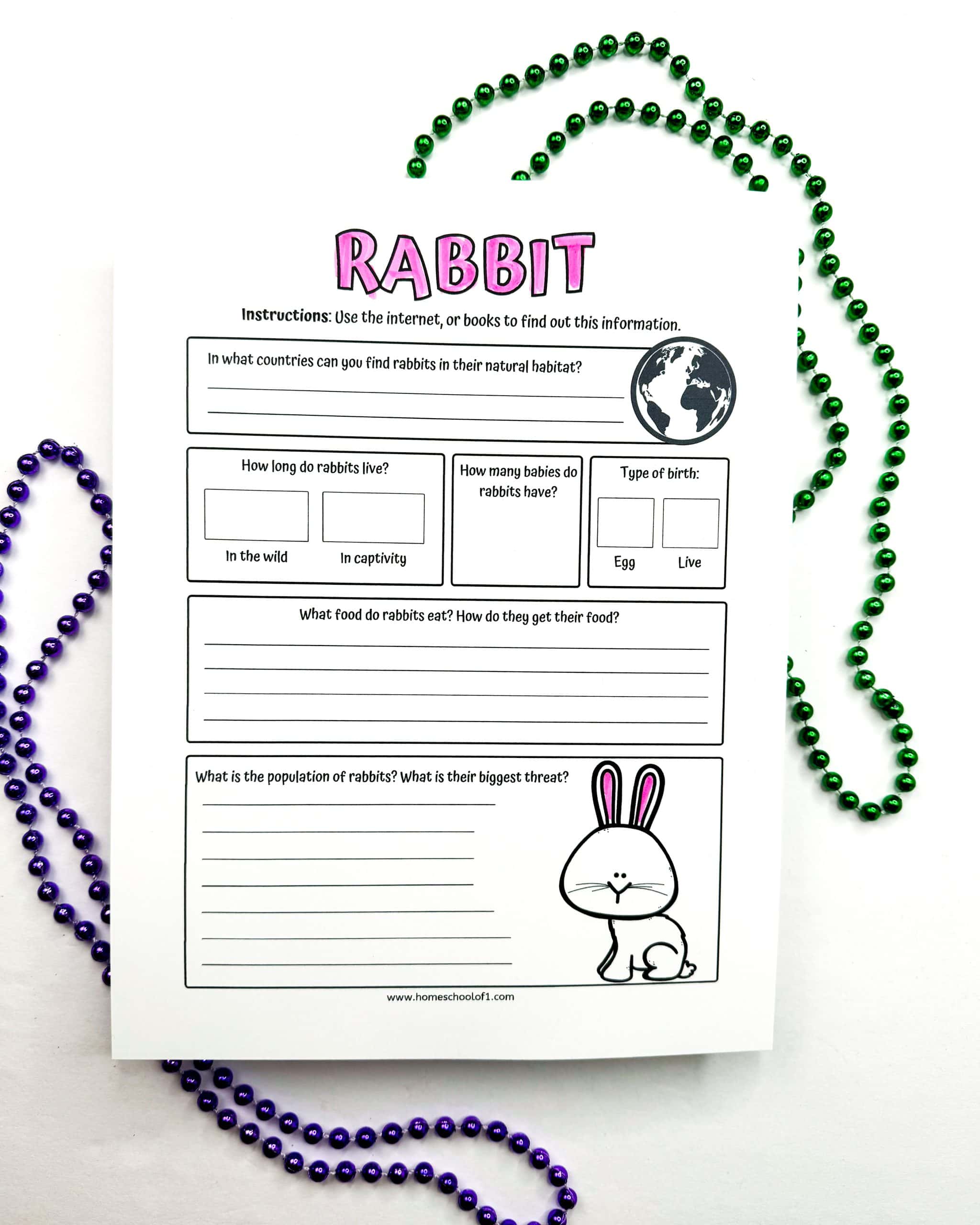
For older elementary students, the research sheet encourages deeper thinking:
- Where do rabbits live naturally?
- How long do they live in the wild vs captivity?
- How many babies do they have?
- Do they lay eggs or give live birth?
- What do they eat?
- What are their biggest threats?
This page turns the rabbit life cycle worksheet into something more than just sequencing, it becomes a mini science study.
If you have the Life Cycles book, it’s a helpful companion for answering many of these questions without sending kids straight to Google
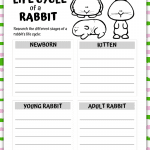
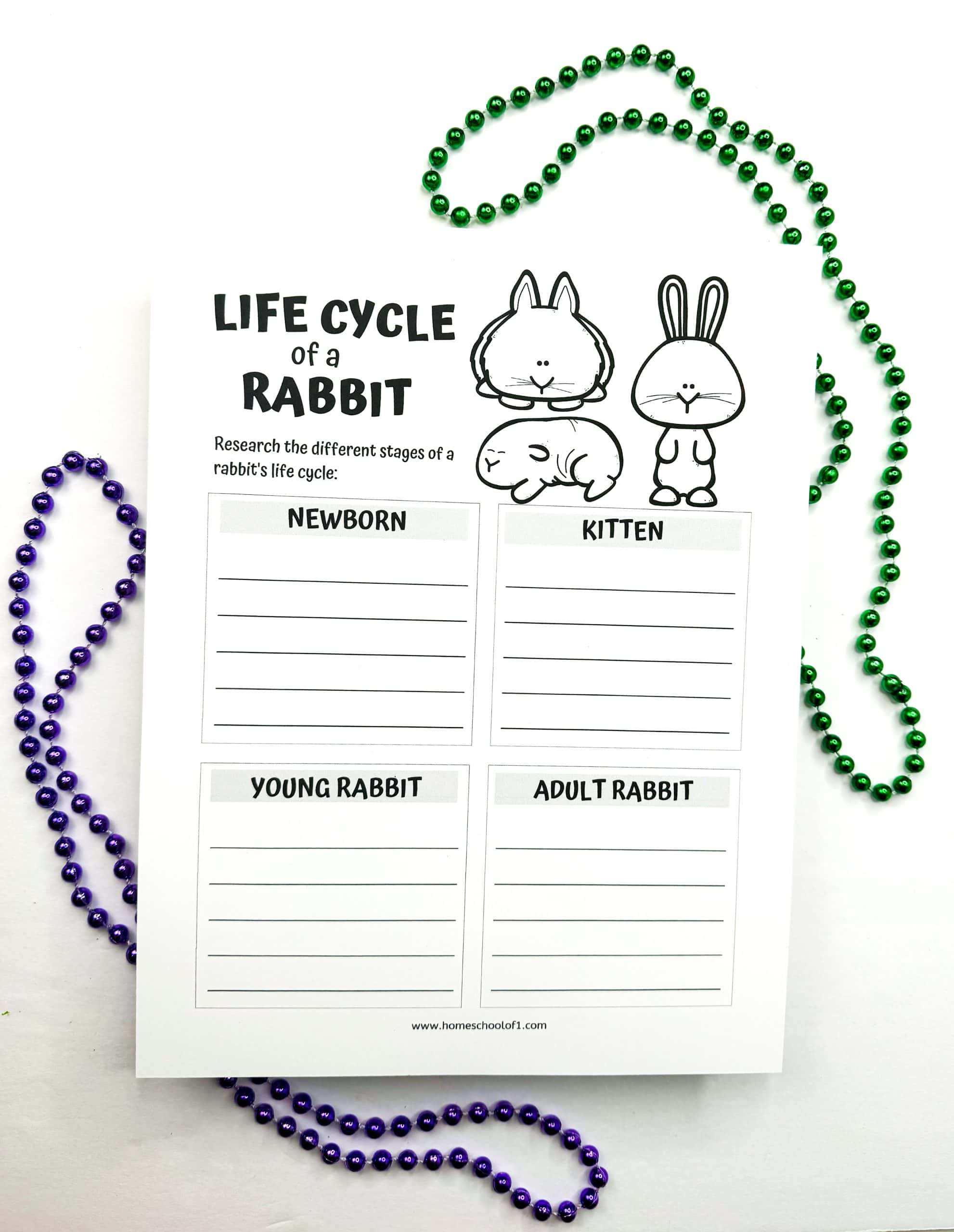
Life Cycle of a Rabbit Worksheet
The core life cycle page focuses on the stages from newborn kit to adult rabbit. Students write facts about each stage, helping them process how mammals grow and develop.
It’s simple, clear, and easy to use for a focused life cycles lesson.
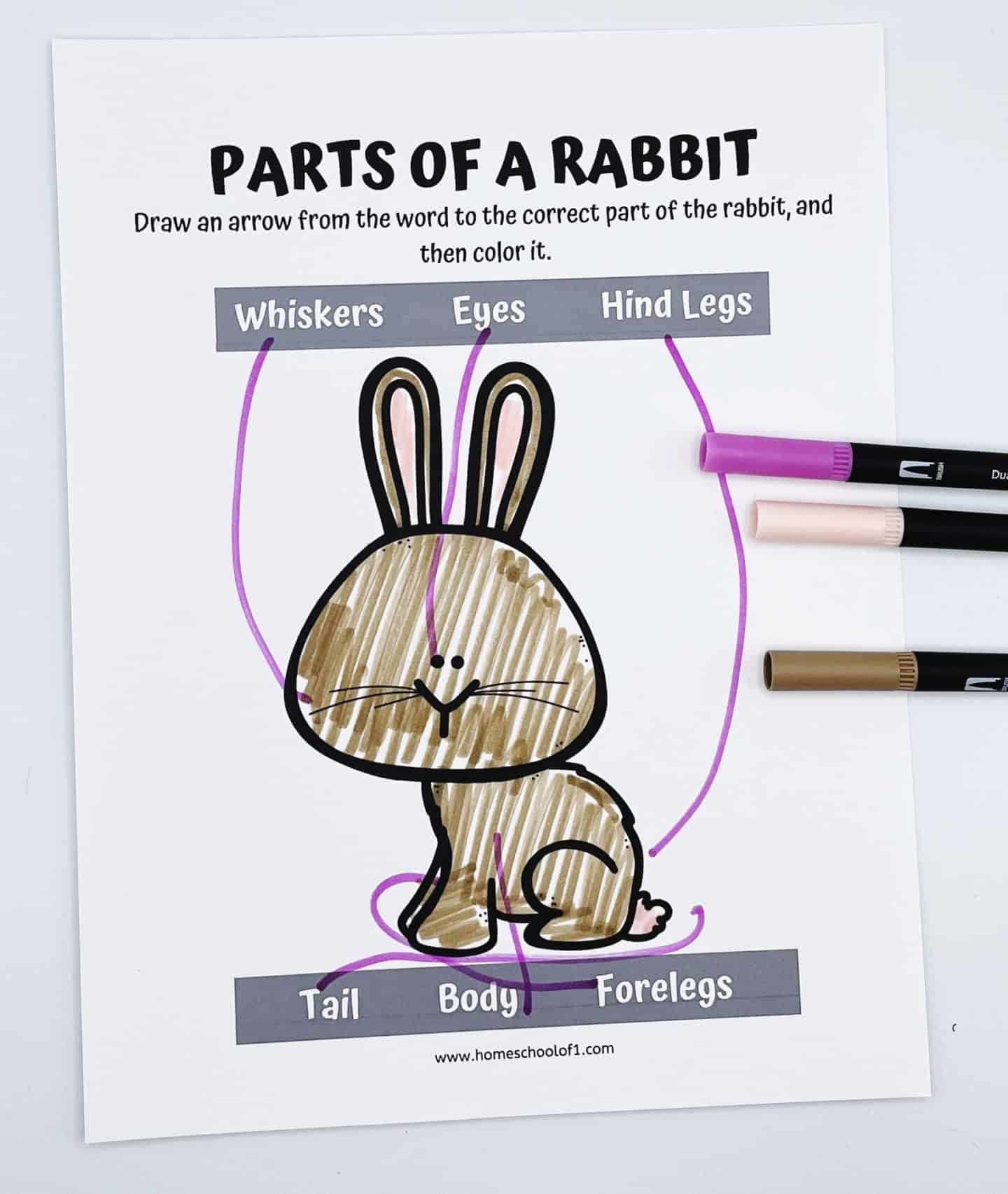
Parts of a Rabbit
Kids label whiskers, eyes, hind legs, tail, body, and forelegs. It’s straightforward, but it reinforces vocabulary and observation skills.
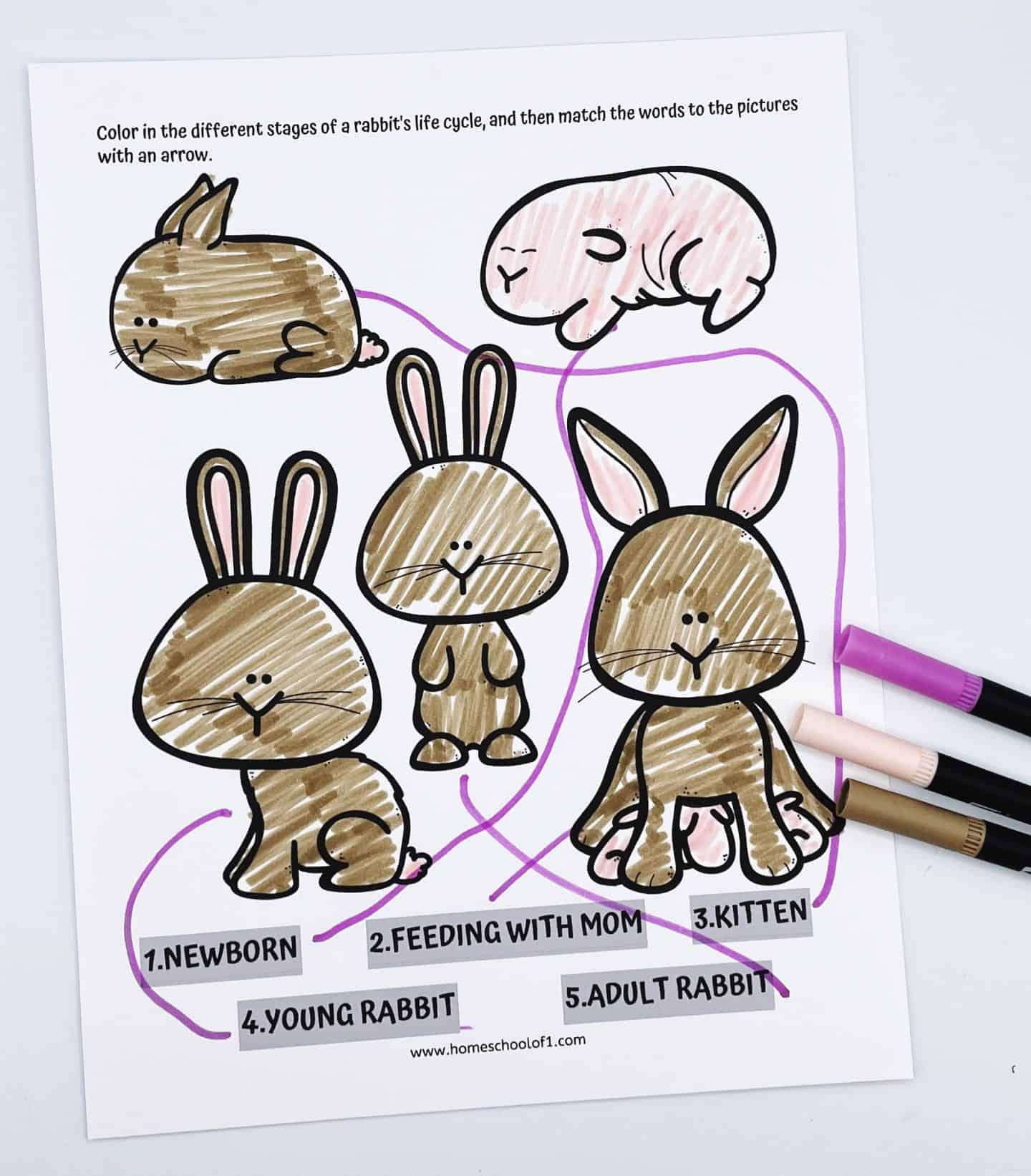
Coloring Life Cycle
There’s also a life cycle coloring page for visual learners. Coloring while labeling helps younger students remember the sequence without it feeling like a test.
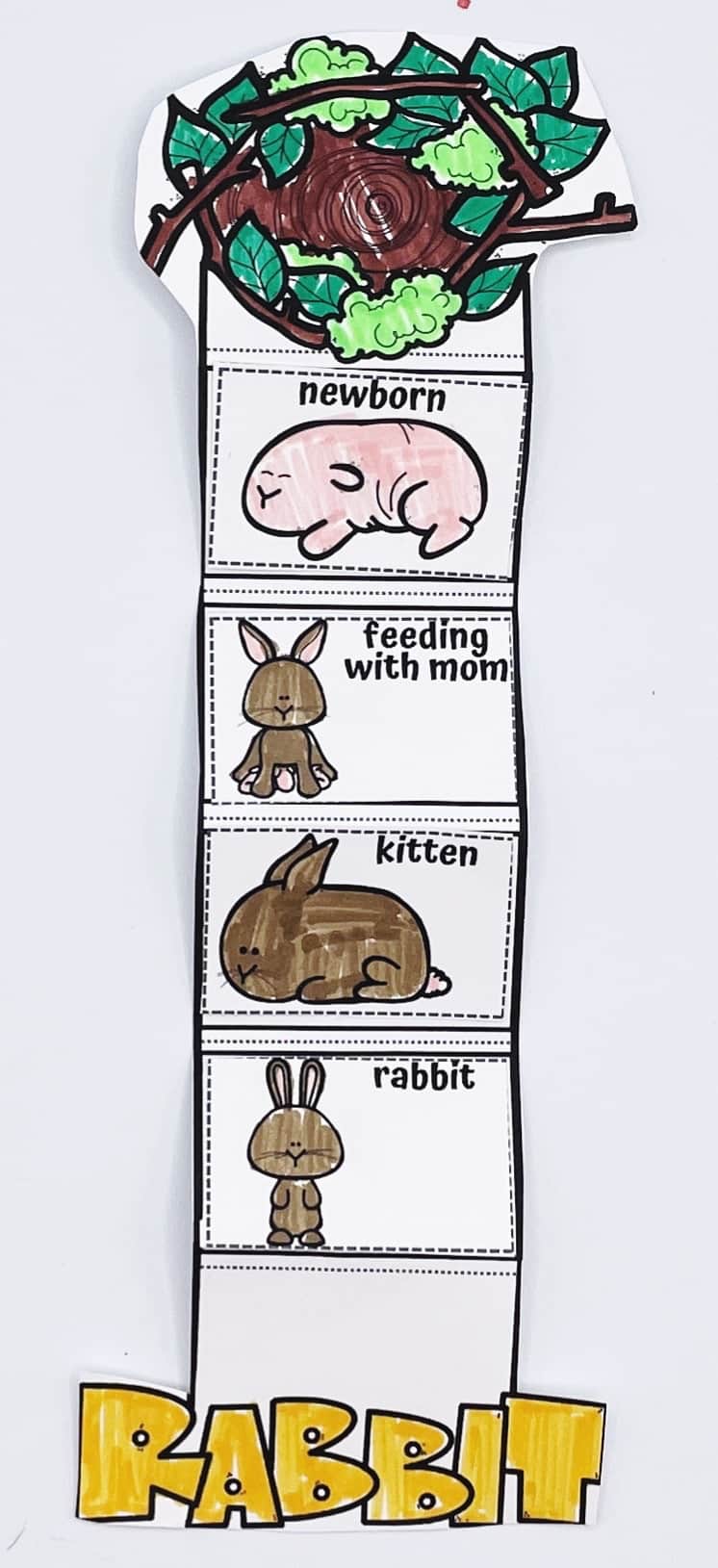
Foldable Rabbit Craft
Students cut and glue the stages in order, creating a simple visual sequence they can refer back to later. It’s a great way to reinforce progression from newborn to adult.
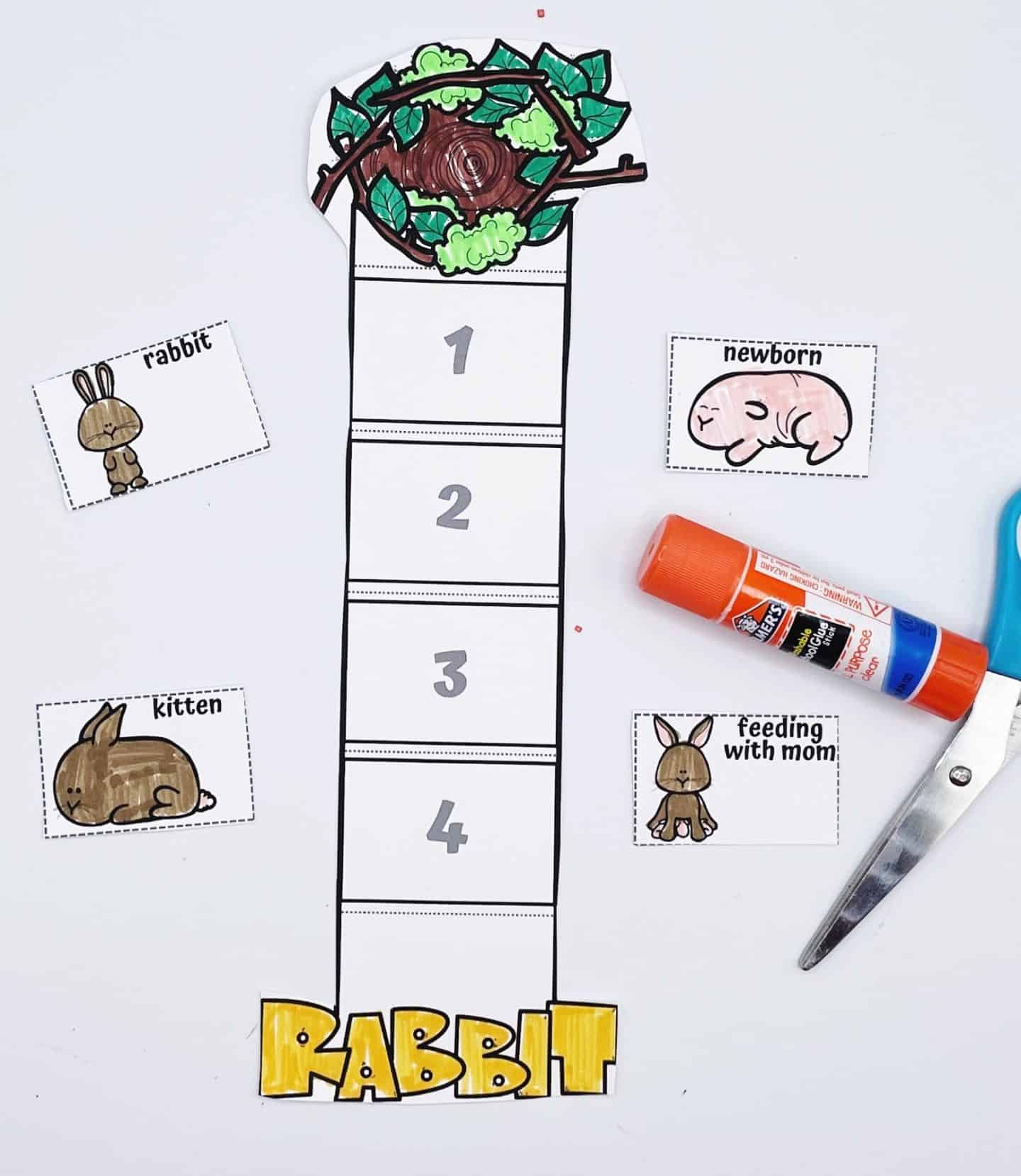
Younger children may need assistance with cutting, and pre-coloring can be helpful.
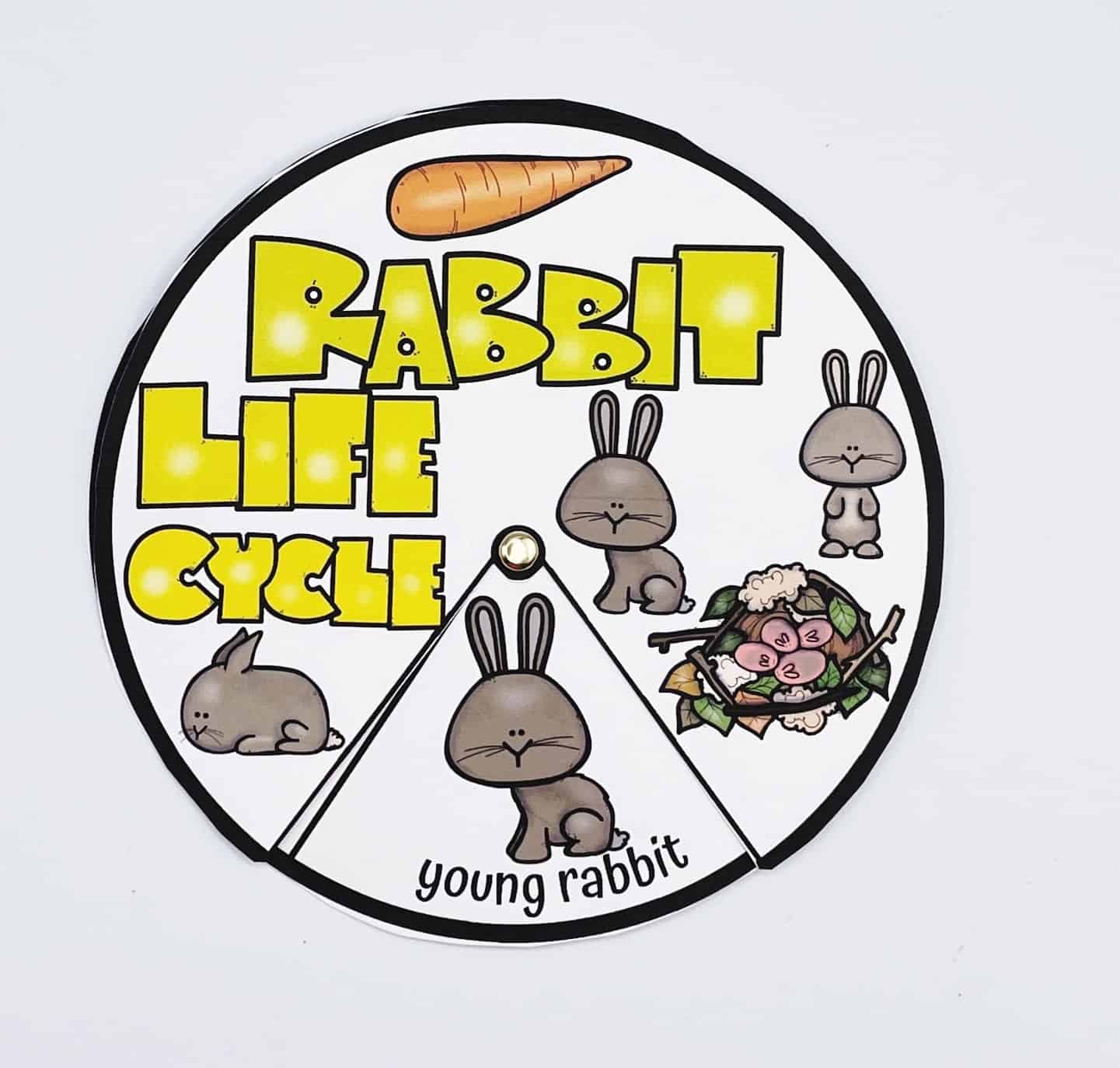
Rabbit Spinning Wheel
The spinning wheel shows each life stage one at a time. Turning it makes the sequence feel interactive instead of static, and it’s often the page kids remember most.
Keep the Learning Going
If you’re putting together a full life cycles unit, you can explore all of our animal life cycle activities for similar printable sets covering different animals.
For a spring comparison, the free chicken life cycle printables work well alongside rabbits, especially when talking about mammals versus birds.
Younger kids might also enjoy the rabbit handprint art as a simple follow-up craft.
And if you want to add a plant example into your study, the carrot life cycle coloring sheet is an easy way to compare how plants and animals grow differently.
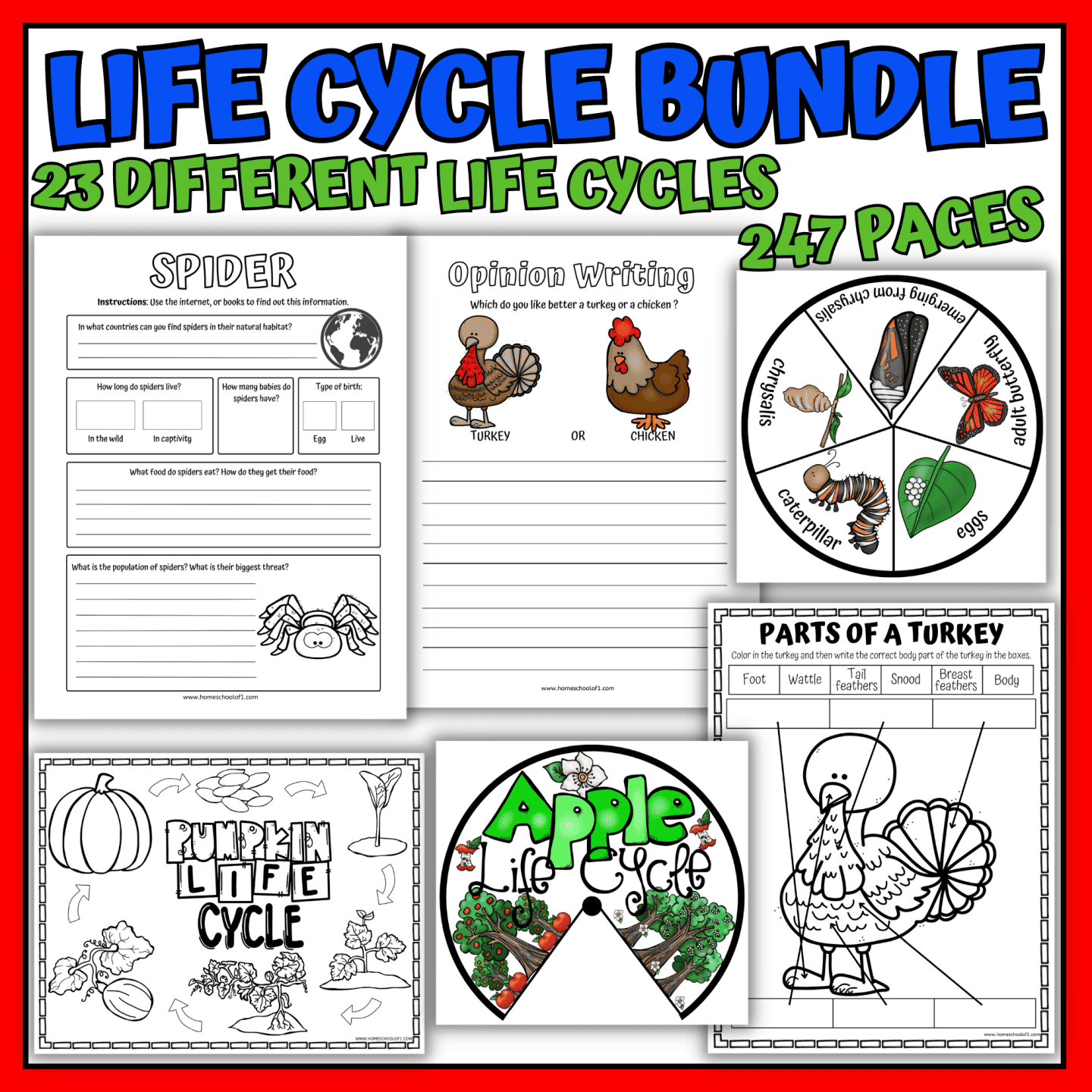
Get Every Life Cycle Worksheet in One Bundle
Save time with 23 printable life cycle units covering animals, plants, and nature. Perfect for homeschool, classrooms, and science centers.
Get Your Free Printable Rabbit Worksheets Here!
If you need something ready to go, this printable life cycle bundle includes 247 pages across 23 different life cycles.
Ready to grab your free printable? Just pop your name and email into the form below, and it’s all yours!
Tip: Use a personal email address (like Gmail), school or work emails sometimes filter printable links.
If you don’t see the form below, click here to get the free PDF.
Last Updated on 4 September 2026 by Clare Brown
